Unlawful conscription and protests

Russians quickly concluded that even the mildest statements from Putin and the Defense Ministry were not to be trusted. Within the first days of the draft, there was evidence that some of those called up were people clearly outside fighting age — for example, a 49-year-old private or a 63-year-old colonel. In some villages, all men were taken without exception. Men who have been called up already say that they are billeted in barracks without beds. Their relatives have repeatedly testified that the men are sent for training without undergoing medical exams and are not given food or water.
None of this is surprising. Numerous studies say that Russia’s mechanisms for registering and mobilizing reservists have been underfinanced for decades — and that military commissariats are among the most backward and disorganized institutions in the country. Underlining this point, Russia has no unified electronic database of those liable for military service. In these circumstances, enlistment officers are forced to call up anyone and everyone to meet the demands from above.
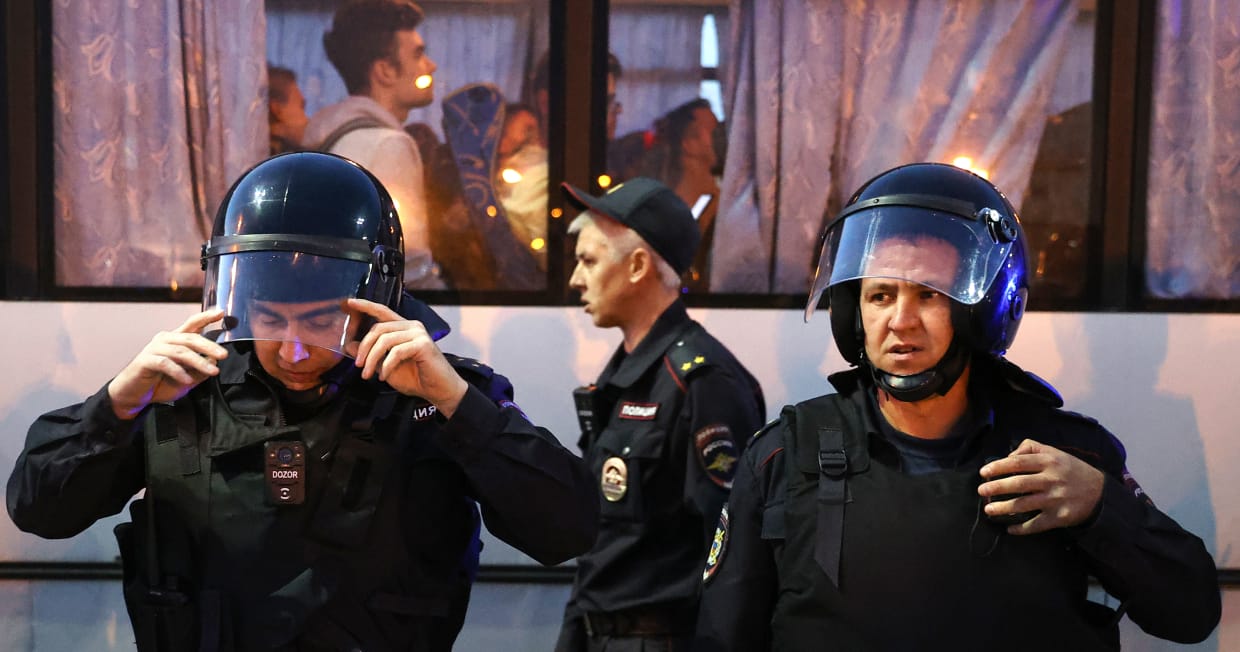
A chaotic and often illegal mobilization of Russian men could provoke widespread protests. This may be tempered by the regime’s hard-headed approach to dealing with dissent. Despite this, protests have already emerged, generally led by women. Unsanctioned demonstrations have taken place in the republic of Sakha in eastern Siberia, as well as in Kabardino-Balkaria and Chechnya in the North Caucasus. The protest movement reached its apex in Dagestan, where people are taking to the streets for a third day. Moscow and St. Petersburg residents held protests in the mobilization’s early days, but they faltered after a harsh police crackdown. All in all, at least 783 people were detained over the weekend after rallies in 33 cities.
Alexei Levinson, head of social and cultural research at the independent Levada Center pollster, told The Bell that mobilization will increase the number of opponents to the war in Russia, but that mass protests are unlikely in the immediate future. Mobilization changes public opinion: it is no longer possible to ignore the war, but this could also introduce a heroic note: “We are a nation of soldiers. We will fight, it’s not our first time, etc,” Levinson said of the possible new mentality. “I think there are dark times ahead,” he concluded.
Political analyst Grigory Golosov echoed this, saying mass protests are unlikely to happen any time soon: it takes time for discontent to mature, and more time still for dissenters to come together and agree on a way forward. “Under the extreme level of repression typical of the Russian regime, this can only be expected when, first, a significant group of people feel disadvantaged by what is happening and, second, when they understand that only collective action, rather than individual, can resolve the issue,” Golosov said.