Foreign banks in Russia after four years of the war


After the invasion of Ukraine and the sanctions shock of 2022, foreign banks massively reduced or completely halted their operations in Russia. The vacant market niches were quickly occupied by Russian players, but a significant number of foreign subsidiaries continue to do business in Russia, albeit in a very different form, as industry outlet Frank Media reported.
European banks: caught between sanctions and regulators
European banks are in the trickiest position. They have been under pressure from the European Central Bank since 2022, which is demanding a faster wind-down of operations in Russia. On the other hand, Russia’s central bank consistently complicates the exit procedure: transactions need approval, while currency and corporate restrictions are imposed.
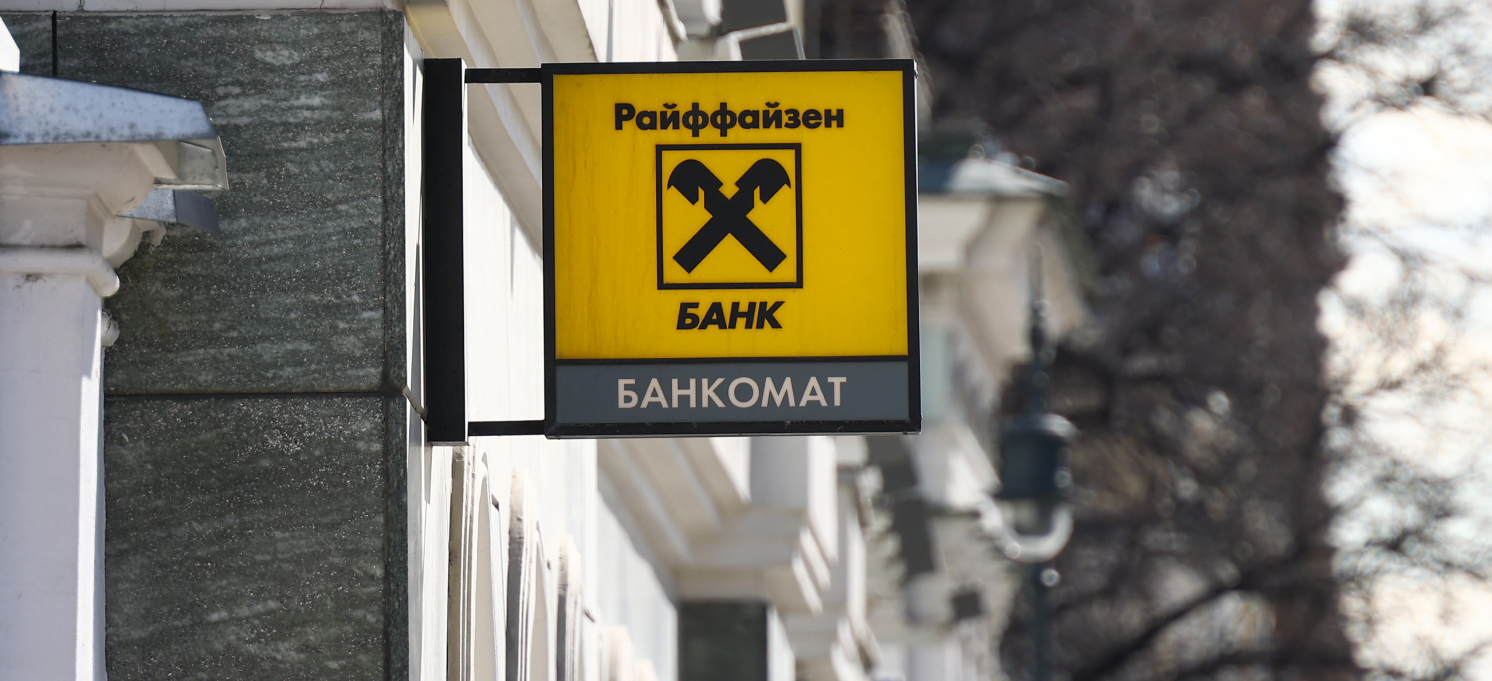
Despite their reduced operations, the subsidiaries of two leading banks, Raiffeisen Bank International and UniCredit, are still significant players in Russia, ranking 12th and 20th respectively in terms of assets.
Raiffeisen Bank’s credit portfolio has reduced fourfold since early 2022, to 255 billion rubles ($3.2 billion). At UniCredit, the fall is almost tenfold, from 670 billion to 67 billion ($850 million). Italy’s Intesa shows a similar trend, down from 56 billion to less than 5 billion rubles ($63 million). Nonetheless, Intesa remains highly profitable: according to Expert RA, the bank earns primarily from foreign exchange transactions, posting a return on equity of 69% in April 2025.
A reduction in lending has not led to a corresponding outflow of client funds. Deposits in European subsidiaries are generally declining only slowly, and in some cases actually increasing. This freed-up liquidity is largely being deposited in accounts at the Central Bank. Raiffeisen Bank’s deposits there rose from 50 billion in Feb. 2022 to 839 billion rubles ($10.6 billion) by late 2025, making up about 40% of its assets. UniCredit’s accounts at the Central Bank are worth 317 billion rubles ($4 billion), or 42% of its assets, while its loan portfolio is worth less than 9%. Intesa has about 75% of its assets held at the Central Bank.
According to Expert RA, the operational model for these banks has effectively been reduced to treasury operations: settlement transactions for a select group of clients and placing liquidity in risk-free instruments.
‘Friendly’ banks: growth amid crisis
While European players withdrew, banks from China, India and South Korea expanded their presence. The Russian subsidiaries of the Bank of China and ICBC moved into the top 30 based on assets by the end of 2024. Since then they have classified their financial statements.
Other public Chinese banks continue to grow: subsidiaries of the China Construction Bank increased sixfold in four years, with client funds up tenfold. At Commercial Indo Bank, client deposits rocketed from 2 billion to 95 billion ($1.2 billion) rubles despite a minimal loan portfolio and placing liquidity with the Central Bank.
Hungary’s OTP Group stands out. Its Russian subsidiary tripled its loan portfolio between 2022 and 2025 to 360 billion rubles ($4.6 billion) by greatly expanding its consumer and corporate lending. OTP Bank also became the only European bank authorized to pay dividends to its parent company.
US banks: Blocked funds accumulate
American players stand out. The balance sheet at the Russian subsidiary of JPMorgan Chase shows a sharp rise in funds in correspondent accounts and “other” accounts, which cover blocked assets in C-Type accounts. Nominal growth is not due to business development, but the accumulation of dividends and coupons on securities. Things are similar at Citigroup. Most of its assets are held in C-Type accounts managed by the Deposit Insurance Agency. By the end of 2025, Citigroup approved the sale of its Russian business in a deal that should conclude in the first quarter of the year at an estimated $1.2-billion loss.
Why the world should care
The main dilemma facing the remaining European banks is how to minimise exit losses. There are potential buyers, but they are talking about discounts of up to 60% and mandatory contributions to the Russian government. Meanwhile, their Russian subsidiaries still generate profit: in the third quarter of 2025 they accounted for 38% of Raiffeisen’s total profits and more than 8% of the returns for UniCredit Group. Four years into the war, foreign banks are less active in Russia but not everyone is ready to quit completely. In 2026, Raiffeisen Bank, UniCredit and Intesa are likely to keep seeking a balance between sanctions, regulatory restrictions and the cost of leaving altogether.
French version edited by Marika Ruggiero, German version edited by Jan Möller