Putin vs. Central Bank


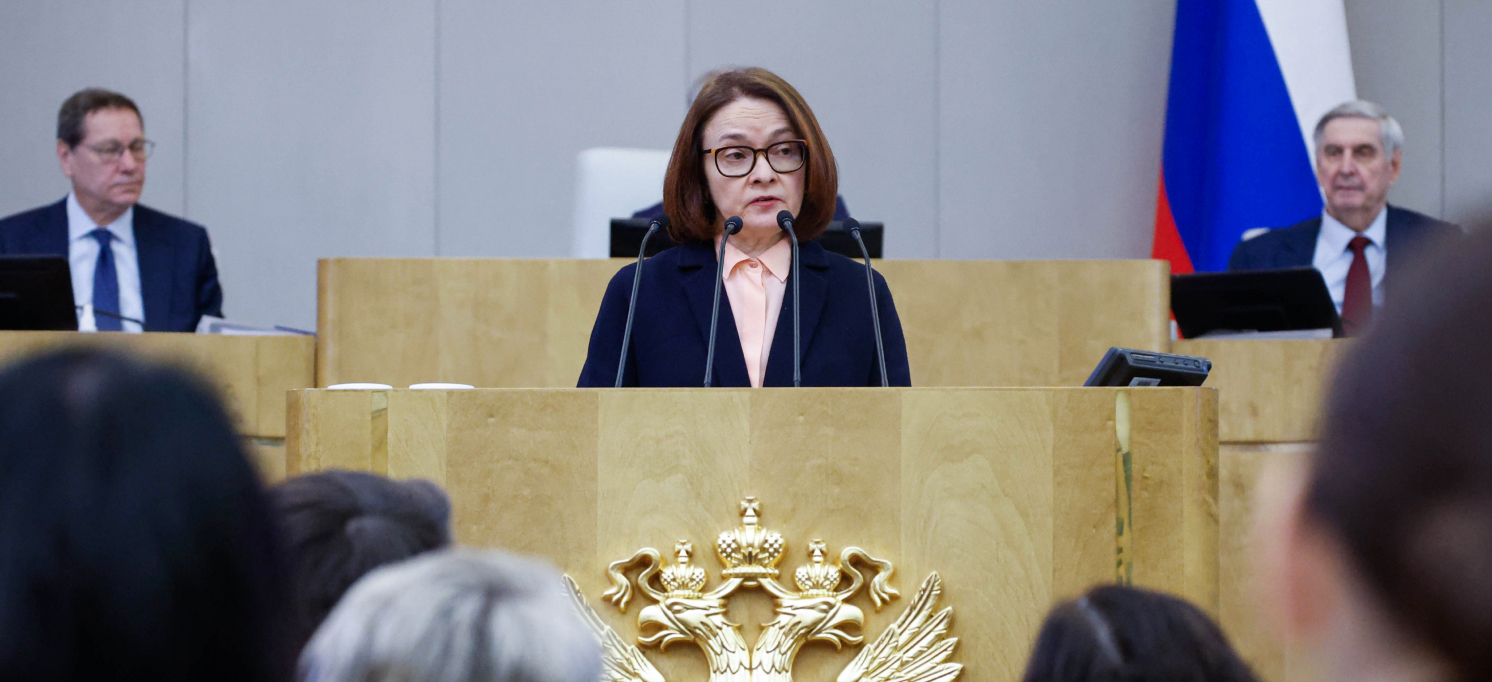
Next Friday’s interest rate decision and press conference by central bank chief Elvira Nabiullina are set to be watched even more closely than usual, after the bank entered into a rare public disagreement with President Vladimir Putin.
In an unusual move, Putin argued in favor of lowering interest rates during a televised government meeting on the economy. The following day, Central Bank Deputy Governor Alexei Zabotkin told Vedomosti that room for a rate cut remained limited, offering the following arguments:
- According to the latest Rosstat data, inflation slowed to 5.31% from 5.58% in April (analysts had expected 5.36%). Monthly inflation came in at 0.17%, compared with a consensus forecast of 0.22%. Putin cited these figures as justification for a rate cut, but Zabotkin said they did not constitute a signal for monetary easing yet.
- The economy is still stretched, running above its real potential. Unemployment is at record lows, while the core components of inflation continue to grow at 4–5% annually. In Zabotkin’s assessment, inflationary pressure remains elevated.
- Fiscal policy is adding to inflation. The disinflationary contribution from the state that had been envisaged in its budget plans for 2026 “has not yet materialized”, and high public sector spending continues to support strong aggregate demand.
- The disinflationary effect of a stronger ruble because of higher oil prices has largely run its course. At the same time, the inflationary impact of rising global prices continues to build. The longer the blockade of the Strait of Hormuz lasts, the more intense that pressure could get.
- The main obstacle to policy easing is consumer and business behavior. Russians are projecting their experience of high inflation over the past three to four years into their expectations for the future. As long as inflation expectations remain elevated, room for rate cuts will remain limited.
High-frequency data for June already points to accelerating inflation. During the week ending June 8, inflation reached 0.20%, partly due to rising gasoline prices, adding further arguments in favor of the Central Bank’s cautious approach.
Whether the Central Bank can defend its macroeconomic outlook in the face of growing criticism from the very top of the political system will be a test of the regulator’s independence. That independence, and indeed much of the regulator’s role, is closely tied to Elvira Nabiullina personally.
A second reason to watch Friday’s meeting closely is that Nabiullina has now been absent for more than a week due to illness — having missed several scheduled appearances, including last week’s St. Petersburg International Economic Forum. It is an open question whether she will be at next Friday’s press conference. And if she is there, will she criticize the government for increasing spending in a way that threatens to fuel inflation?
Why the world should care
Next Friday’s meeting will serve as a litmus test for the degree of the Central Bank’s independence and may offer clues about Nabiullina’s future as governor.