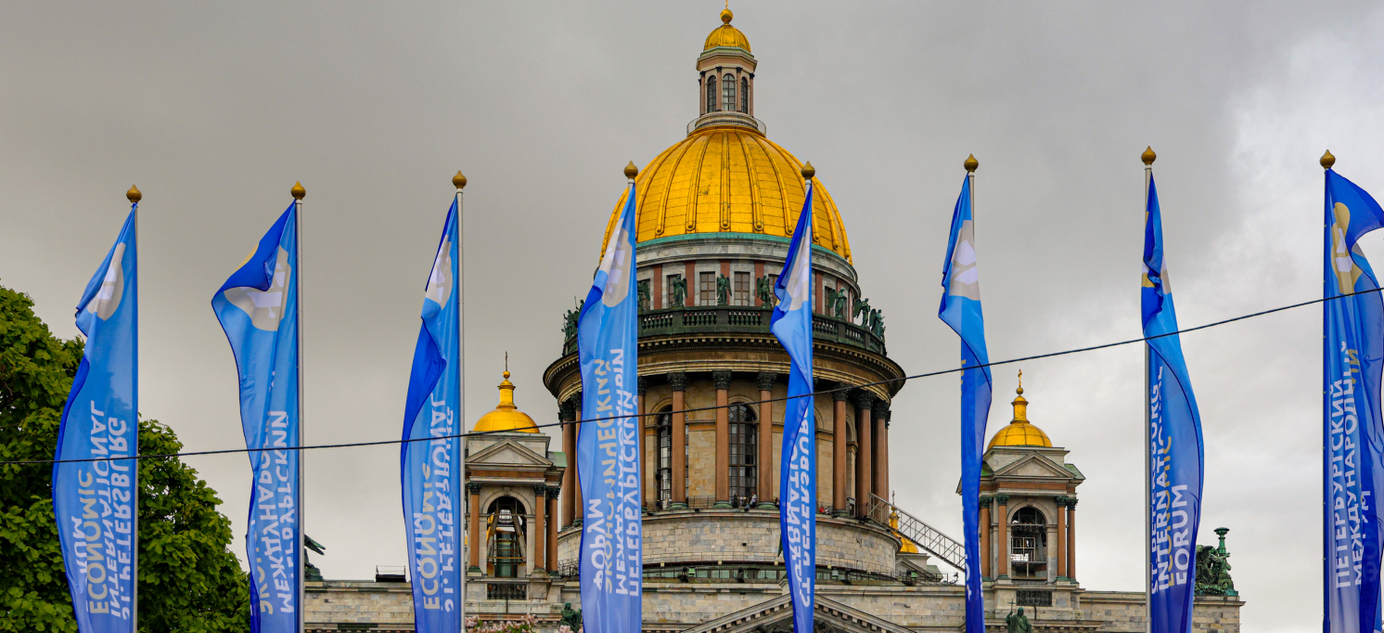
SPIEF 2026: The economic forum that avoided the subject


Delegates arrived at the St. Petersburg International Economic Forum under columns of smoke rising over the Gulf of Finland. Seventeen kilometers from the venue, the St. Petersburg Oil Terminal had been hit by Ukrainian drones. This year’s official guest country was Saudi Arabia, in keeping with Russia's pivot to the East. Among the foreign guests were right-wing video blogger Candace Owens, Steven Seagal, and the Tate brothers — who face human trafficking charges — greeted at the Moscow airport with bread and salt and a Cossack ensemble. Their arrival provoked a backlash even among pro-war bloggers.
The macro panel: Boring even for the insiders
The traditional main macroeconomic session — this year titled, "How to Return to a Trajectory of Sustainable Economic Growth Amid Global Uncertainty" — was dull even for the participants, admitted Maxim Oreshkin, Putin’s deputy chief of staff.
Oreshkin argued that as major economies such as Germany stumble, Russia's opportunities are expanding — thanks to growth in China, India, and Africa. Finance Minister Anton Siluanov boasted of low external debt and a manageable budget deficit, urging the audience to safeguard Russia's "financial sovereignty." Economy Minister Maxim Reshetnikov asked the audience not to read too much into the 14.3 percent collapse in fixed capital investment in the first quarter, and promised to draw "younger and older" demographics into the labor force.
Nabiullina missing
What went unsaid was more revealing than the comments from the stage. The tax burden was mentioned only in passing — and positively. Siluanov assured the audience that despite two rounds of tax increases, "we haven't gone too far." The mass closure of small and medium-sized businesses under the pressure of expensive credit, collapsing demand, and a growing tax burden was not discussed. Institutional degradation was addressed only in euphemism, with Reshetnikov saying that "institutions matter more than the growth model". He listed the importance of protecting property rights and investors, without a word on the state's ongoing seizure of major private businesses.
Putin’s familiar script
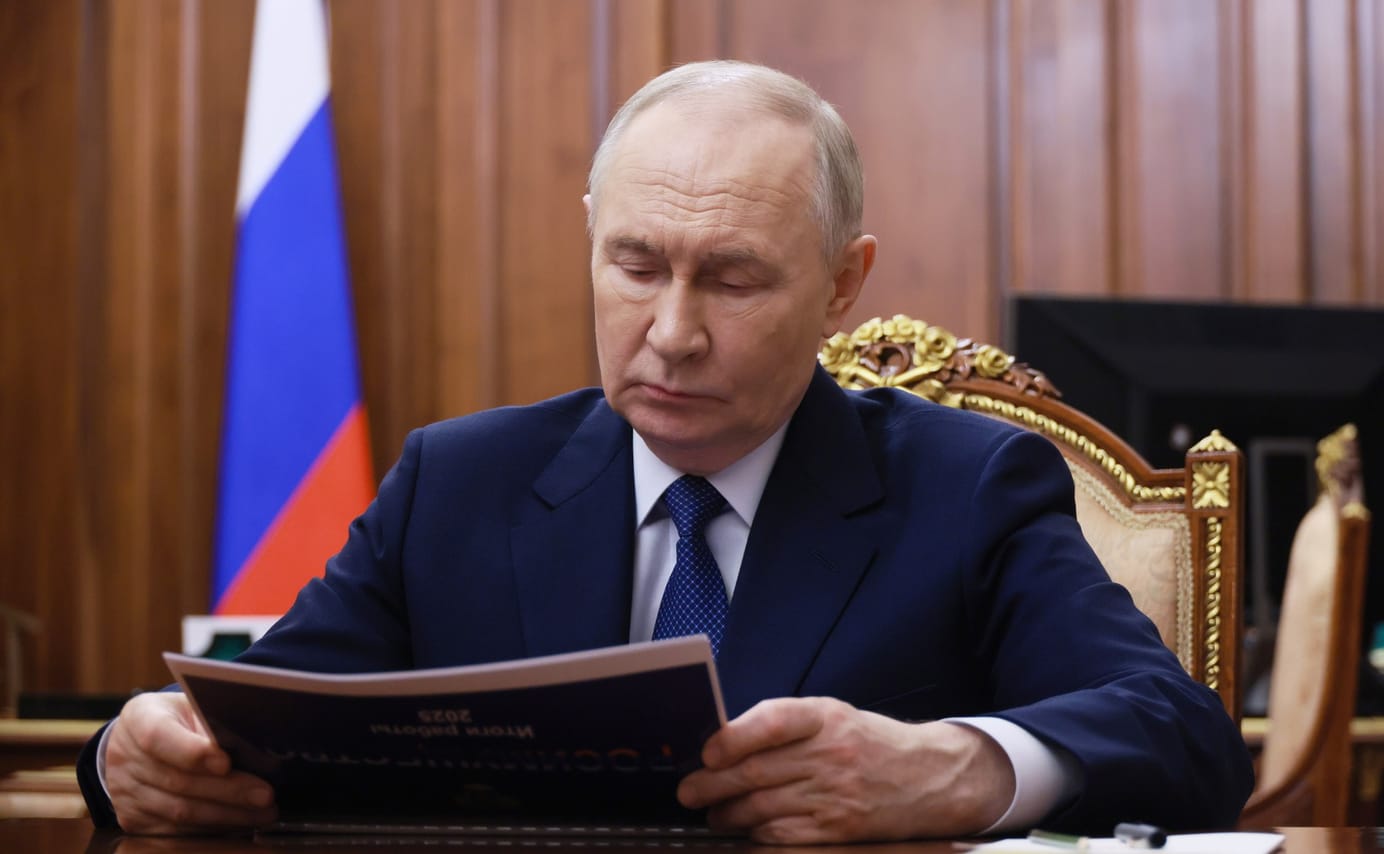
Putin's address to the forum is a well-established genre: a positive assessment of the Russian economy, criticism of the West, and a commitment to sovereignty. This year, the entire economic portion could be reduced to a single sentence: "Russia's economy is slowing down deliberately. There are no threats to the economy, nor will there be in the foreseeable future." Russia’s priorities remain unchanged: import substitution, self-reliance, BRICS partnerships. The government was instructed to develop national strategies for autonomous platforms and systems.
Why the world should care
SPIEF has long ceased being a venue where Russia's real economic problems are discussed. It is a showcase through which the authorities broadcast their preferred narrative. But this year, the gap with reality was unusually wide. The forum celebrated growth opportunities in an economy that just posted a quarterly contraction for the first time in three years. It praised tax policy against a backdrop of record business pessimism and a sixfold drop in new store openings. It called for protecting financial sovereignty, while the budget deficit has already exceeded the full-year target. And it invoked property rights without acknowledging a wave of nationalizations that have spooked investors and business owners.